The Magnetic Separators Recycling Plants Rely On
The recycling industry has evolved rapidly, becoming more efficient, more automated, and more environmentally responsible. One of the most important technologies enabling this progress is magnetic separation, a proven method for recovering valuable metals from complex waste streams.
Modern recycling operations depend on advanced magnetic separation equipment to extract metals from industrial, municipal, and commercial waste. Whether processing plastics, electronic waste, scrap metal, or mixed solid waste, magnetic technology plays a vital role in improving material purity, protecting equipment, and increasing overall recovery rates.
At Magnapower, we design and manufacture some of the most powerful and efficient magnetic separators available, engineered specifically for demanding recycling environments. Today’s facilities typically use a combination of overband magnetic separators, drum magnets, eddy current separators, and specialist stainless‑steel recovery systems to extract ferrous and non‑ferrous metals from mixed waste.
Why Magnetic Separation Matters in Recycling
Magnetic separation uses magnetic force to pull magnetic and paramagnetic materials away from non‑magnetic materials. Recycling plants rely on this process to extract steel and other metals from mixed waste streams, improving both recovery rates and material purity.
The recycling industry generates massive amounts of mixed waste every day. Without proper metal separation, recycling plants may face contamination issues, equipment damage, and lower material quality.
Key benefits of magnetic separation:
Improved material purity: Metal contamination can reduce the quality and purity of recycled products. A magnet separator helps remove unwanted metal particles and improves the final product quality.
Increased recycling efficiency: Automatic systems process large volumes quickly and accurately, boosting throughput.
Better resource recovery: Recovered metals can be recycled and reused in manufacturing, reducing reliance on raw materials.
Environment protection: Efficient metal recovery reduces landfill waste and supports sustainable industrial development.
Low maintenance Design: Engineered to keep your process running smoothly with minimal operator input, delivering consistent performance and reducing the time and cost on downtime and routine maintenance.
Magnetic Separation Equipment Used in Recycling
Different recycling applications require different types of magnetic equipment. Modern recycling plants may use several advanced systems depending on material type and processing requirements.
Below, we explore the key technologies used across the industry, and how Magnapower’s equipment delivers superior performance.
Possible process flow in metal separation
| Stage | Separator | Purpose |
| Primary – Ferrous | Overband Magnetic Separator and / or Magnetic Head Pulley | Remove large ferrous metals |
| Secondary – Ferrous | Drum Magnet | Continuous ferrous recovery |
| Non-Ferrous | Eddy Current Separator | Recover non-ferrous metals such as aluminium, copper and brass |
| Conductive Metals | Induction Sorter | Recover stainless steel and other non-magnetic metals |
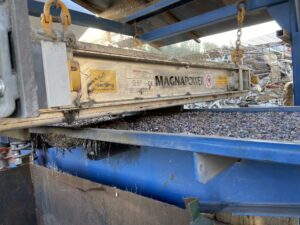
1. Primary Ferrous Recovery
In primary ferrous recovery systems, either an overband magnet and/or a magnetic head pulley may be used depending on the layout, material burden depth, and performance requirements.
Magnapower Overband Magnetic Separators
An overband magnetic separator, suspended above a conveyor in either a cross‑belt or inline arrangement, continuously extracts ferrous metals from the waste stream.
Magnapower’s overbands are known for:
- High ferrous recovery rates for cleaner end product
- Self‑cleaning operation
- High‑intensity magnetic circuits
- Deep extraction through heavy burden layers
- Robust construction for 24/7 use
- Options for crossbelt magnetic separator or inline magnetic separator configurations
- Available in permanent or electromagnetic versions
These units protect downstream equipment and ensure early removal of steel and other ferrous-metal items.
In certain system configurations, a magnetic head pulley can complement or replace the overband magnet. This is particularly beneficial when the conveyor carries a thick or heavily compacted layer of material, as the head pulley provides continuous magnetic extraction at the discharge point. Using both technologies together can significantly enhance separation efficiency by ensuring that ferrous metals are captured even when they are buried deep within the material flow.
Magnapower Magnetic Head Pulleys
Installed at the conveyor’s discharge point, the Magnapower magnetic head pulley offers powerful, continuous ferrous‑metal removal, making it a trusted choice throughout the recycling and material‑handling sectors.
Ideal for:
- Removing residual ferrous contamination
- Improving purity before optical sorting or baling
- Space‑restricted installations
- Secondary ferrous recovery
- Providing maximum magnetic separation efficiency
Head pulleys are a simple but highly effective addition to any magnetic conveyor system and can be customised to match your exact requirements.
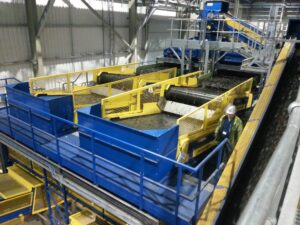
2. Secondary Ferrous Separation:
Drum magnets (or magnetic drums) can provide continuous recovery of smaller ferrous fragments.
As material moves across the drum surface, magnetic particles adhere to the drum while non‑magnetic materials fall away.
Magnapower Drum Magnets
Our drum magnets are engineered for:
- Continuous automatic operation
- To provide maximum separation performance utilising neodymium or ferrite magnet depending on the application
- High metal recovery efficiency
- Low maintenance requirements
- Large‑scale recycling applications
- Improved separation accuracy
Drum magnets can be fully customised to match feed width, product size, throughput requirements and are essential for producing clean ferrous fractions and preparing material for non‑ferrous recovery.
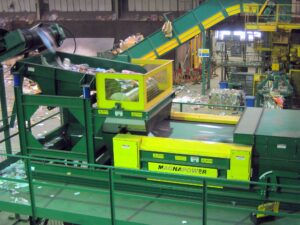
3. Non‑Ferrous Metal Recovery
Once ferrous metals are removed, the next priority is recovering aluminium, copper, brass, and other non‑ferrous metals. This is where the eddy current separator becomes one of the most profitable machines in the plant.
Magnapower Eddy Current Separators
Magnapower eddy current separators deliver maximum separation force across a wide range of recycling applications. They offer:
- Maximum separation force with eccentric rotor
- Magnapower’s proprietary magnet design for superior performance
- Strong repulsive forces for maximum throw
- Excellent recovery of small particle sizes
- Variable speed conveyor for higher throughput and flexibility
- Quick maintenance with simple belt change system (~1 hour)
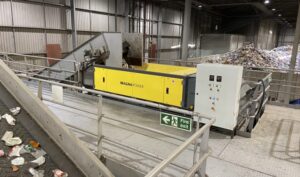
4. Stainless Steel & Conductive Metal Recovery
Even after ferrous and non‑ferrous metals have been removed, many waste streams still contain stainless steel and other conductive metals that standard magnetic systems cannot capture. To maximise total metal recovery and achieve the highest product purity, these materials require specialist detection and separation technology. Magnapower offers two advanced solutions for this stage the Induction Sensor Sorter and the MagStar.
Choosing the Right Magnetic Separator
Selecting the correct equipment depends on:
- Material type and composition
- Particle size distribution
- Throughput requirements
- Purity targets
- Installation space
- Budget and ROI expectations
- Maintenance requirements
Most recycling plants rely on a combination of separation technologies working together in sequence, rather than depending on a single separator to handle every material type. Achieving the highest levels of metal recovery requires a well‑designed process, and this is where Magnapower’s expertise makes a measurable difference.
Magnapower provides comprehensive support at every stage of a project. Our team works closely with customers to analyse material streams, recommend the most effective separators, that maximise throughput and purity. With in‑house testing facilities, detailed performance reporting, and decades of practical experience, we ensure every plant is equipped with the right technology to achieve maximum metal recovery and long‑term operational efficiency.
Conclusion
Today’s recycling facilities prioritise efficiency, automation, and sustainability, and magnetic separation has become a preferred technology across industries.
Compared to traditional sorting methods, magnetic systems offer:
- Faster processing
- Better accuracy
- Lower operational costs
- Improved worker safety
- Higher recovery rates
- Higher uptime
With rising waste volumes and stricter environmental regulations, the demand for advanced magnetic recycling equipment continues to grow.
Recycling plants rely on a combination of magnetic separators, eddy current separators, and conductive metal recovery systems to maximise metal separation. Magnapower’s high‑performance equipment is engineered to deliver superior recovery rates, long‑term reliability, and exceptional value.
EXPERTISE YOU CAN COUNT ON
We apply decades of metal separation expertise to deliver the right solution every time
Our advantage? A magnet design unique to us – And it performs like nothing else.