What it Means for Recyclers and Why Separation Matters More Than Ever
The UK is preparing for its biggest recycling overhaul in a generation. On 1 October 2027, the Deposit Return Scheme (DRS) will officially launch across England, Northern Ireland and Scotland, creating a unified system designed to dramatically increase the return and recycling of drinks containers.
For recyclers, waste‑processing operators and materials‑recovery facilities, this is more than a policy shift — it’s a major change in material flows, processing infrastructure and the scale of metal separation required. With millions of additional aluminium and steel cans entering the system, the role of reliable magnetic separation, high‑capacity magnetic separators, overband magnets, and advanced eddy current separators becomes central to meeting DRS‑driven demand.
What the DRS Will Cover
The scheme is mandatory and will apply to:
- Aluminium and steel drinks cans
- PET plastic drinks bottles
- For all sizes from 150ml to 3 litres
- Including multi‑packs, with deposits applied per container
A 20p deposit will be added at the point of purchase for every in‑scope container.
The scale is enormous. Across England, Northern Ireland and Scotland, according to DEFRA we consume around 25 billion drinks containers each year. It is estimated that round 6.5 billion of these – that’s more than 17 million every day are not being recycled and instead sent to landfills, incinerated, or littered. The DRS aims to reverse this trend by incentivising returns and capturing high‑value materials before they enter the general waste stream.
Countries already running similar schemes, such as Germany, Sweden and the Republic of Ireland, achieve an average return rate of around 90%. The UK is aiming for comparable success.
A Three‑Nation Scheme and a New Material Landscape
The DRS will span three nations with a combined population of 66 million. Wales is developing a parallel scheme designed to work alongside the system in England, Scotland and Northern Ireland.
As participation grows, local authorities will see a shift in kerbside waste composition, with many of the most valuable materials such as aluminium, steel and PET, being diverted to return points instead of household recycling bins.
For recyclers and waste‑processing operations, this will mean:
- Higher volumes of pre-sorted, single‑material streams
- More aluminium and steel cans entering the recycling chain
- Increased pressure on sorting, throughput and metal separation capacity
This is a significant operational change and preparation needs to start now.
Recycling Infrastructure: A Surge in Metal Volumes
The DRS will generate large new flows of empty PET bottles and metal cans moving through collection points, logistics networks and recycling facilities.
For operators, this means:
- Increased sorting requirements
- Higher baling and compaction needs
- More transportation of lightweight, high‑volume materials
- Greater demand for reliable magnetic separators such as eddy current separators and overband magnets
Aluminium and steel are both infinitely recyclable without loss of quality. But to maintain purity, and therefore value, they must be separated cleanly and efficiently.
That’s where robust metal separation equipment becomes essential.
Why Metal Separation Matters More Than Ever
With millions more cans entering the recycling stream, facilities will need to ensure their systems can handle the uplift. A typical DRS‑ready separation line may include both ferrous and non‑ferrous recovery stages.
-
Ferrous Metal Recovery (Steel Cans)
Steel cans are magnetic, so they can be captured early in the process using:
These lift steel cans out of the mixed stream and discharge them into a dedicated collection area.
-
Non‑Ferrous Metal Recovery (Aluminium Cans)
Aluminium is non‑magnetic, so it passes through the ferrous stage untouched. But can be separated using:
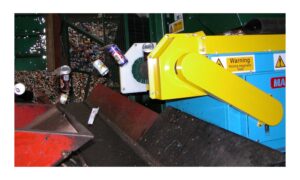
An Eddy Current Separator uses a high‑speed magnetic rotor to induce eddy currents in the aluminium. This creates a repelling force that literally throws the cans forward into a separate collection bay.
This example of a two‑stage process ensures:
- High purity
- High recovery rates
- Maximum material value
- Compliance with DRS quality expectations
This is especially important for operators handling eddy current waste, where clean separation directly impacts revenue.
How Magnapower Supports DRS‑Ready Recycling
Whether you’re planning a capacity upgrade, exploring new processing lines, or looking to improve recovery rates, Magnapower is ready to support you with specialist guidance, responsive customer service, tailored design expertise, and fully integrated metal separation systems. From early‑stage planning through to installation and optimisation, we work closely with operators to ensure their recycling infrastructure is ready for the increased volumes the DRS will bring.
Preparing for 2027 Starts Now
The Deposit Return Scheme represents a huge opportunity for the recycling sector:
- More material
- Higher quality streams
- Greater circularity
- Increased demand for efficient magnetic separation and metal recovery
But it also brings operational challenges that require planning, investment and the right equipment.
If your facility is assessing its readiness for the DRS, Magnapower can help you build a separation system capable of meeting the demands of 2027 and beyond.
Separators
Advanced magnetic separation systems engineered to accurately recover ferrous and non‑ferrous metals for a more efficient recycling process.